
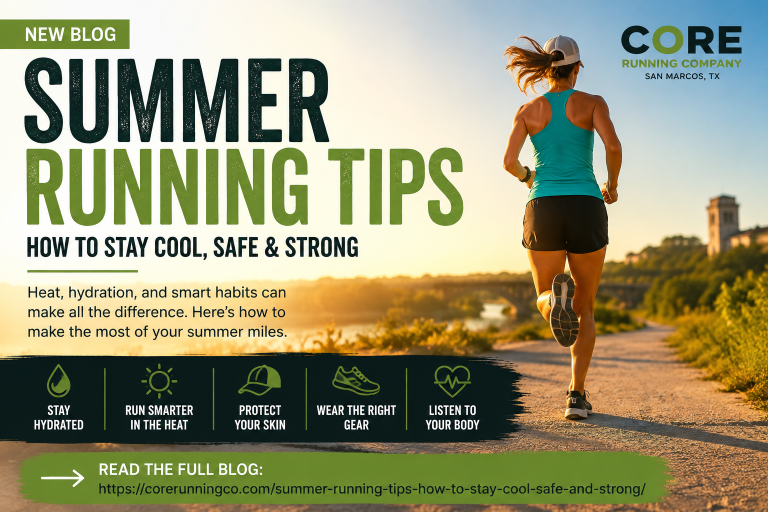
Summer running comes with bright mornings, longer days, and plenty of opportunities to get outside. It also brings heat, humidity, stronger sun, and a greater risk of dehydration.
For runners in Central Texas, preparing for the weather is not optional. A few thoughtful adjustments can help you run more comfortably, recover better, and avoid turning an ordinary workout into a battle with the sun.
Run During the Coolest Part of the Day
Whenever possible, plan your run for early morning or later in the evening.
Temperatures can rise quickly after sunrise, and pavement often holds heat long after the hottest part of the day has passed. An earlier start may mean cooler air, less direct sun, and a more manageable workout.
Check the temperature, humidity, and heat index before heading outside. High humidity makes it harder for sweat to evaporate, which reduces your body’s ability to cool itself.
Hydrate Before You Feel Thirsty
Hydration starts before your run.
Drink water regularly throughout the day rather than trying to make up for it immediately before exercising. For longer runs, especially in hot or humid conditions, consider carrying water or planning a route with reliable hydration stops.
Electrolytes may also be helpful when you are sweating heavily or exercising for an extended period. Sodium and other electrolytes help replace what your body loses through sweat.
Your hydration needs are personal. Workout length, temperature, sweat rate, body size, and overall health can all affect how much fluid you need.
Slow Down and Adjust Your Expectations
Hot-weather pace is not always comparable to cool-weather pace.
Your body works harder to regulate its temperature in the heat, so a pace that normally feels comfortable may suddenly feel demanding. That does not mean your fitness has disappeared. It means your body is doing additional work behind the scenes.
Use effort as your guide. Slow down when needed, shorten the route, add walk breaks, or turn a difficult workout into an easier run.
A smart adjustment is not a failed workout. It is how you keep training consistently.
Wear Lightweight, Breathable Gear
Choose lightweight clothing designed to move moisture away from your skin. Light-colored apparel can also absorb less heat than darker fabrics.
A breathable hat or visor can help shield your face, while moisture-wicking socks may reduce friction and discomfort.
Your shoes matter, too. Shoes that fit properly and match your movement can help you stay comfortable as heat causes feet to swell during longer workouts.
Protect Your Skin and Eyes
Apply a broad-spectrum sunscreen before going outside, including on commonly missed areas such as the ears, neck, shoulders, and backs of the legs.
Sunglasses and a hat or visor can provide additional protection from glare and direct sunlight.
For longer runs, remember that sweat can reduce sunscreen effectiveness. Follow the product’s directions regarding reapplication.
Choose Your Route Carefully
A shaded route can feel dramatically different from an exposed stretch of pavement.
Look for routes with trees, water access, shorter loops, or places where you can stop if necessary. Running repeated loops near your home, vehicle, or a familiar trailhead may be safer than committing to a long out-and-back route during extreme heat.
Let someone know where you are going, especially when running alone.
Listen to Your Body
Heat illness can develop quickly. Stop exercising and seek a cooler environment if you experience symptoms such as:
Dizziness or lightheadedness • Confusion • Nausea • Chills or goosebumps despite the heat • A severe headache • Unusual weakness • Loss of coordination • A rapid decline in performance
Recovery Matters
After your run, continue hydrating and give your body time to cool down.
Change out of wet clothing, eat a balanced meal or recovery snack, and pay attention to how you feel during the hours afterward. Summer workouts can take more out of the body than the mileage alone suggests.
Sleep, nutrition, hydration, and easier recovery days all support consistent training.
Make Summer Miles Work for You
Running in the heat requires flexibility. Some days will call for an earlier start. Others may require a shorter route, slower pace, treadmill workout, or complete rest day.
The goal is not to defeat the weather. The goal is to train wisely enough to keep moving through it.
Core Running Company can help you find properly fitted shoes, breathable apparel, hydration products, socks, accessories, and other gear designed to make summer movement more comfortable.
Visit Core Running Company in San Marcos for personalized guidance and gear chosen for the way you move.